 keymodels
Crowdsourcing
How can crowdsourcing improve people, teams, or organisational effectiveness?
Contents
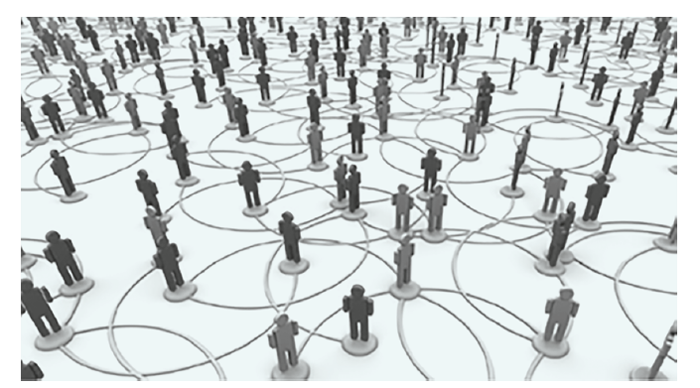
Crowdsourcing is a method that captures the knowledge, ideas and creativity of a large group of people or even a group as large as society as a whole.
Crowdsourcing uses an open call to gather ideas, knowledge, effort or judgement from a large network. A well-framed question lets an organisation reach contributors beyond the people normally assigned to the problem.
When to use it
Use it early enough for outside input to influence the work, before a decision is fixed. Invite a relevant community, or deliberately include people from another field when reframing is valuable. Keep decision rights explicit: contribution does not automatically confer authority.
Business-to-customer (B2C) companies use crowdsourcing for marketing and product decisions. A large crisp manufacturer, for example, asked consumers to propose flavours, opened the shortlisted ideas to a public vote and produced the winner.
Origins
Public competitions and distributed voluntary problem-solving predate the internet. Journalist Jeff Howe coined crowdsourcing while developing a Wired article in the mid-two-thousands and brought it to a wide audience through “The Rise of Crowdsourcing” the following June. He described an organisation making an open call to a networked population for work conventionally performed by employees or suppliers. Crowdsourcing overlaps with open innovation, citizen science, prediction markets and online communities, but each uses different incentives and aggregation mechanisms.
What it is
The crowd may be external stakeholders or employees across a large organisation. Public internet platforms offer reach; an intranet can mobilise internal expertise while protecting sensitive questions. The method may seek ideas, designs, data, microtasks, predictions, funding or votes, and the governance must match the contribution requested.
How to use it
Define the problem, eligibility, intellectual-property terms, privacy rules, reward and selection process before opening the call. Reach the relevant community through social media, an industry forum, a dedicated platform or the intranet. Make the submission burden proportionate, moderate harmful content and explain how ideas will be filtered and chosen. Combine voting with expert assessment where popularity is not the same as feasibility or value, then close the loop with contributors.
Final analysis
Crowdsourcing can refresh a problem by widening the pool of perspectives, but volume is not wisdom by itself. A large response requires filtering, perhaps through Delphi methods or expert panels. A small, self-selected response creates the opposite problem: a vocal minority may be mistaken for the target population. Assess diversity, expertise, independence and incentives before generalising.
Top practical tip
Launch the call while the solution space is still open, and publish the evaluation criteria in advance so contributors know how useful ideas will be recognised.
Top pitfall
Do not confuse participation with representativeness. Self-selection, imitation, coordinated voting and low response can make the crowd systematically unwise.
Further reading
Surowiecki, J. (2004) The Wisdom of Crowds: Why the Many are Smarter than the Few and How Collective Wisdom Shapes Business, Economies, Societies and Nations. New York: Doubleday Publishing.
Howe, J. “The Rise of Crowdsourcing”, Wired, June.
Howe, J. Crowdsourcing: Why the Power of the Crowd Is Driving the Future of Business. New York: Crown Business.